
Every parent knows the struggle: the kids’ room quickly turns into a sea of toys — dolls, cars, building blocks, puzzles, and educational games all ending up in one overwhelming pile. Not only does this clutter make it difficult for children to find what they want, it also creates stress for parents who spend hours trying to tidy up. A messy environment can even affect a child’s ability to focus, play creatively, and learn effectively.
We wanted to change that. Our goal was to create a space where playtime and learning could both happen with ease — a room that felt calm, organized, and inspiring for the child while making daily life simpler for the whole family.
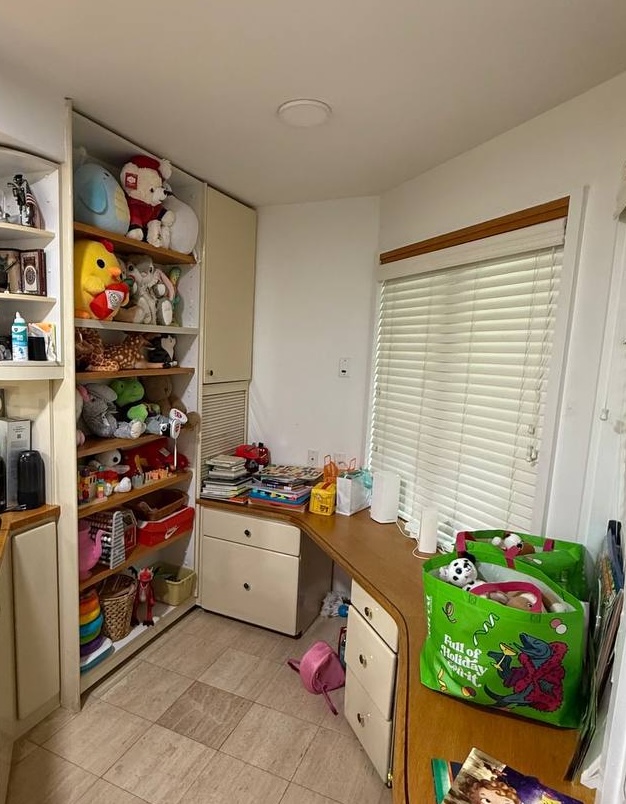
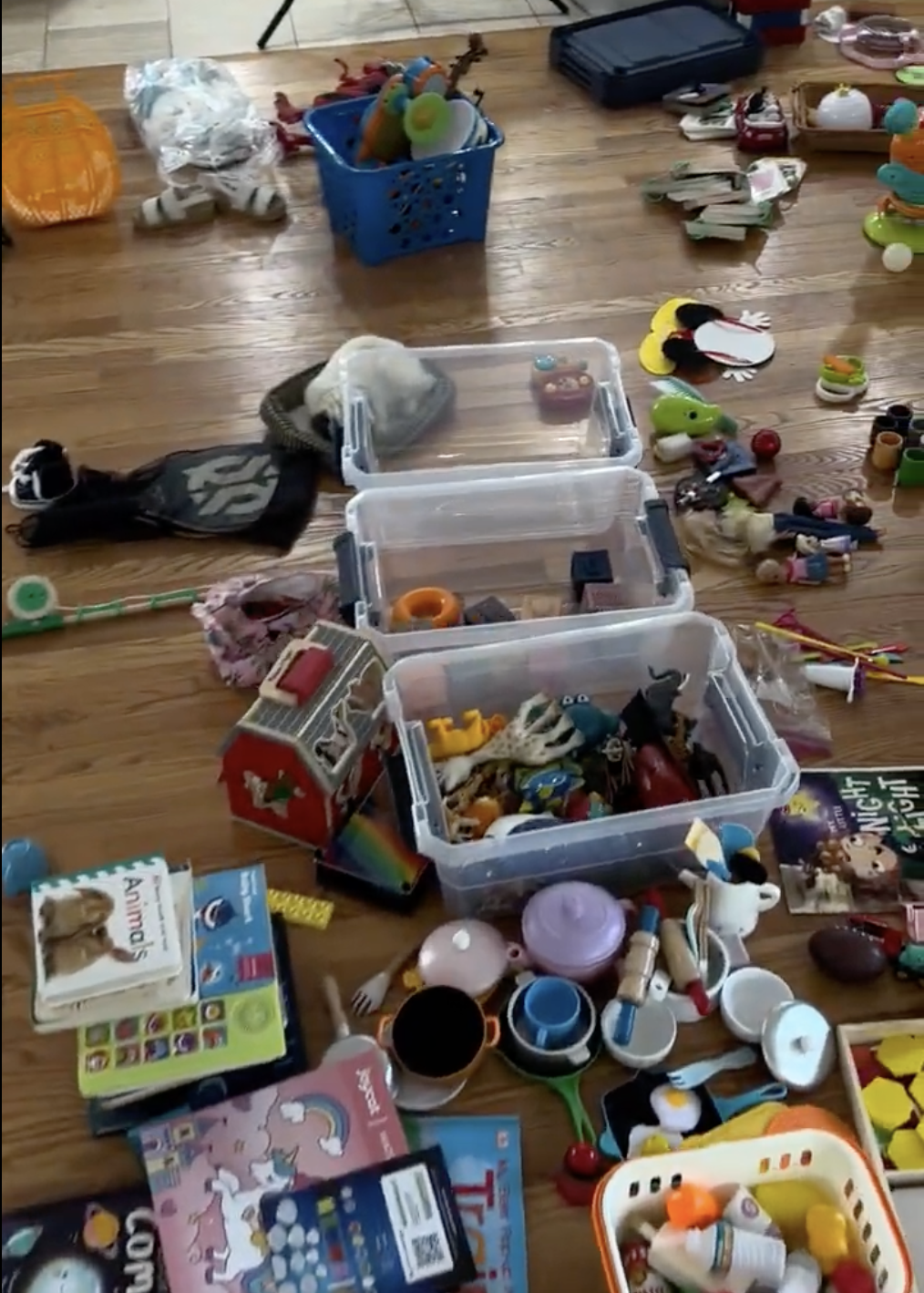
The Problem: When Toys Take Over
In many homes, kids’ toys don’t have a designated place. Cars end up under the bed, dolls on the floor, and art supplies scattered across every surface. This kind of clutter distracts children, reduces their motivation, and makes it almost impossible for them to clean up independently. For parents, it often means endless tidying and frustration instead of quality family time.
Our Solution: A Modular Learning & Storage Station from IKEA
In this project, we designed a playroom around the idea of zoning through smart storage systems. Instead of one big area filled with everything, we divided the space into clear, functional zones, each with its own purpose and storage solution. This approach keeps the room calm and organized, makes it easier for the child to choose activities independently, and allows parents to rotate toys and supplies as interests change.
Here’s how we structured the playroom with a modular storage and learning station from IKEA:
Here’s how we structured the playroom with a modular storage and learning station from IKEA:
1. The Rotating Shelf
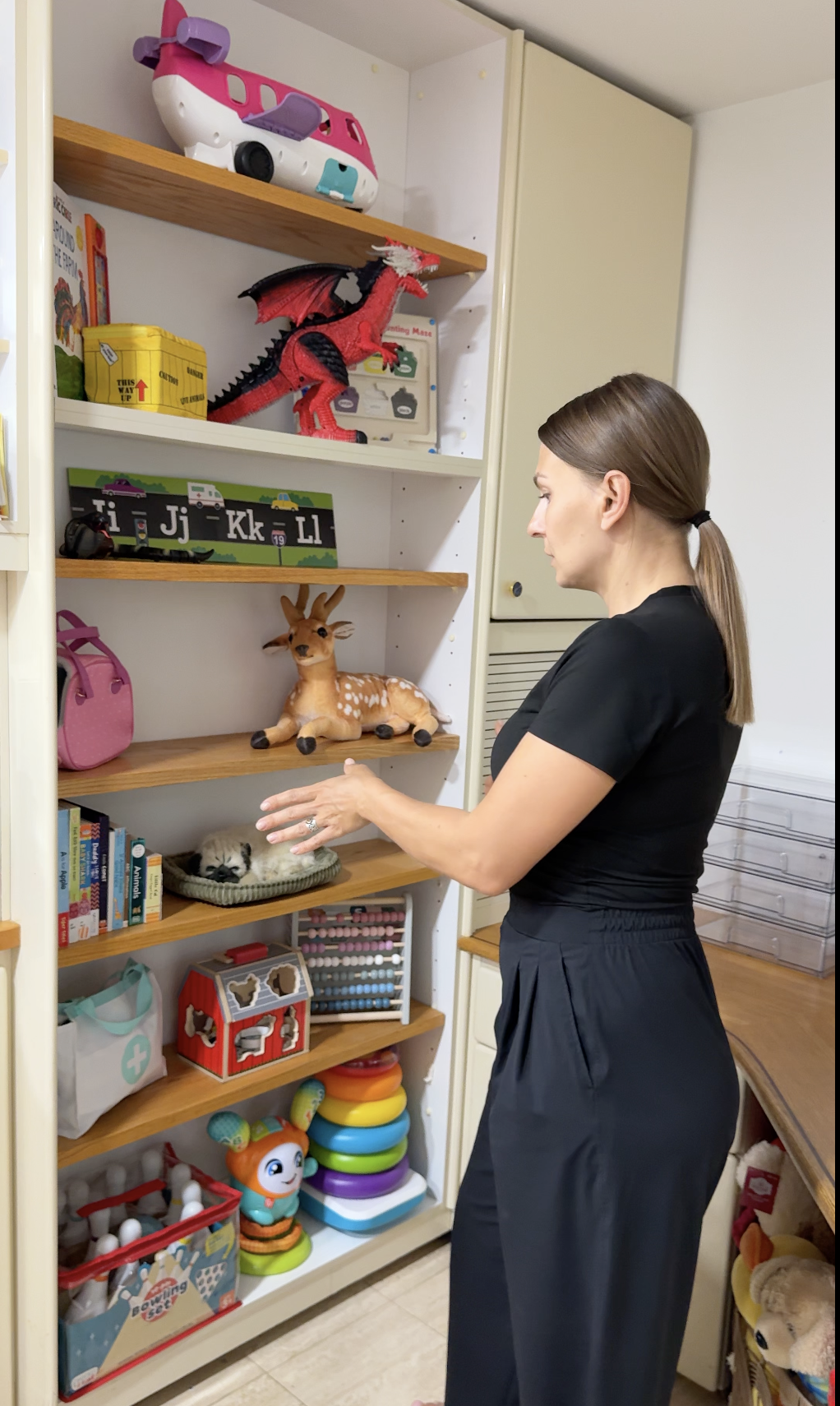
The tall shelving unit is the heart of this system. Instead of overwhelming the child with every toy at once, we introduced toy rotation. Only a few toys that match her current interests are displayed at eye level. Everything else is stored higher up or in closed cabinets.
This way, she can:
• Easily see and choose what she wants to play with.
• Learn to return toys back to their place after use.
• Stay focused without the stress of too many options.
When new toys appear after birthdays or holidays, they’re introduced gradually keeping playtime exciting without clutter.
The tall shelving unit is the heart of this system. Instead of overwhelming the child with every toy at once, we introduced toy rotation. Only a few toys that match her current interests are displayed at eye level. Everything else is stored higher up or in closed cabinets.
This way, she can:
• Easily see and choose what she wants to play with.
• Learn to return toys back to their place after use.
• Stay focused without the stress of too many options.
When new toys appear after birthdays or holidays, they’re introduced gradually keeping playtime exciting without clutter.
2. The Craft Drawer
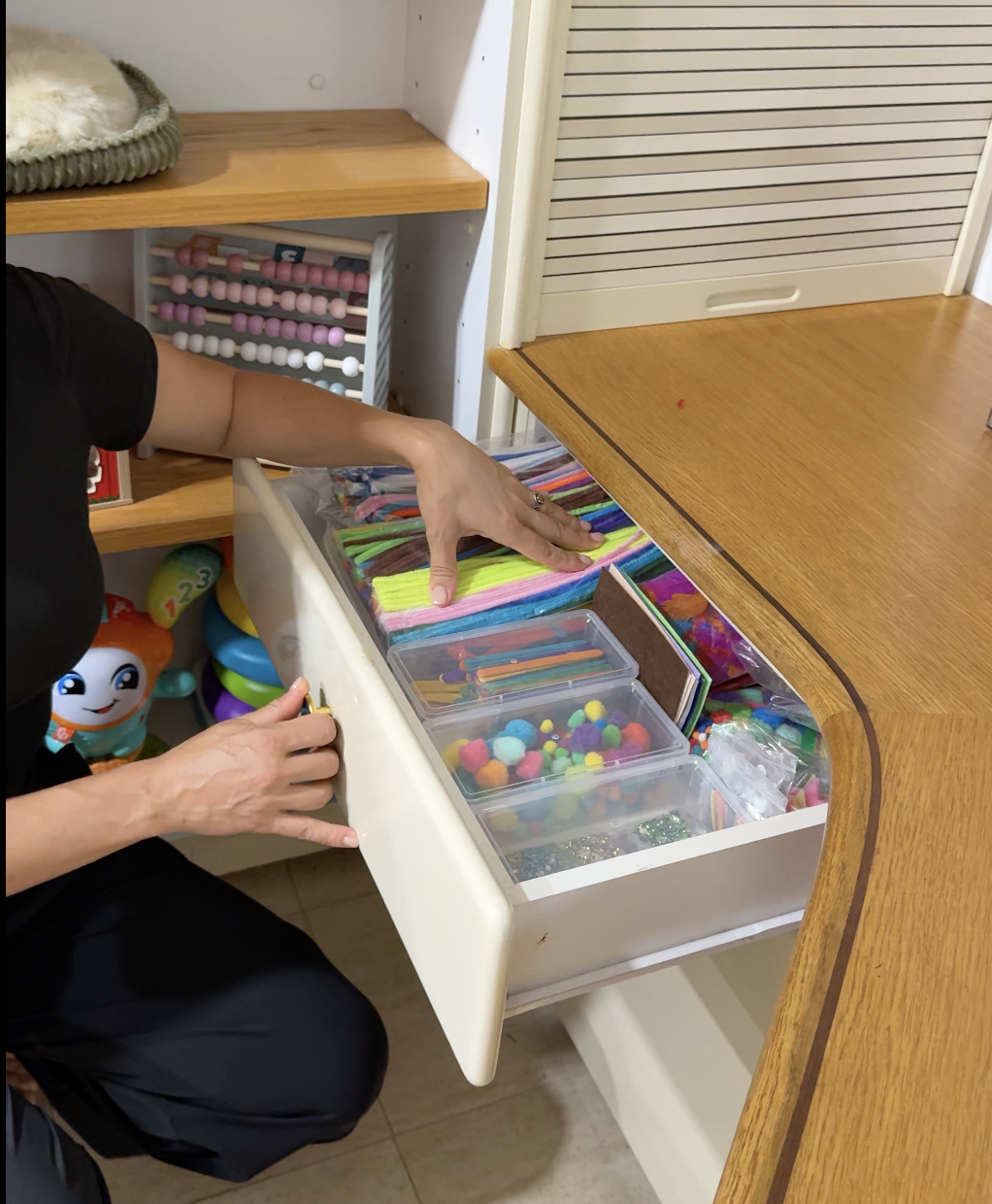
Arts and crafts are wonderful, but they can quickly turn into chaos. That’s why all the small creative supplies — markers, glue sticks, pom-poms, pipe cleaners, and glitter — are neatly stored in clear dividers inside a drawer.
This system allows adults (parents or nanny) to bring out exactly what’s needed for a craft project. The child can still see her supplies, but she isn’t tempted to dump everything out at once. When the project is done, everything returns to its own little box. Order preserved, creativity encouraged.
Arts and crafts are wonderful, but they can quickly turn into chaos. That’s why all the small creative supplies — markers, glue sticks, pom-poms, pipe cleaners, and glitter — are neatly stored in clear dividers inside a drawer.
This system allows adults (parents or nanny) to bring out exactly what’s needed for a craft project. The child can still see her supplies, but she isn’t tempted to dump everything out at once. When the project is done, everything returns to its own little box. Order preserved, creativity encouraged.
3. The Music & Puzzle Drawer
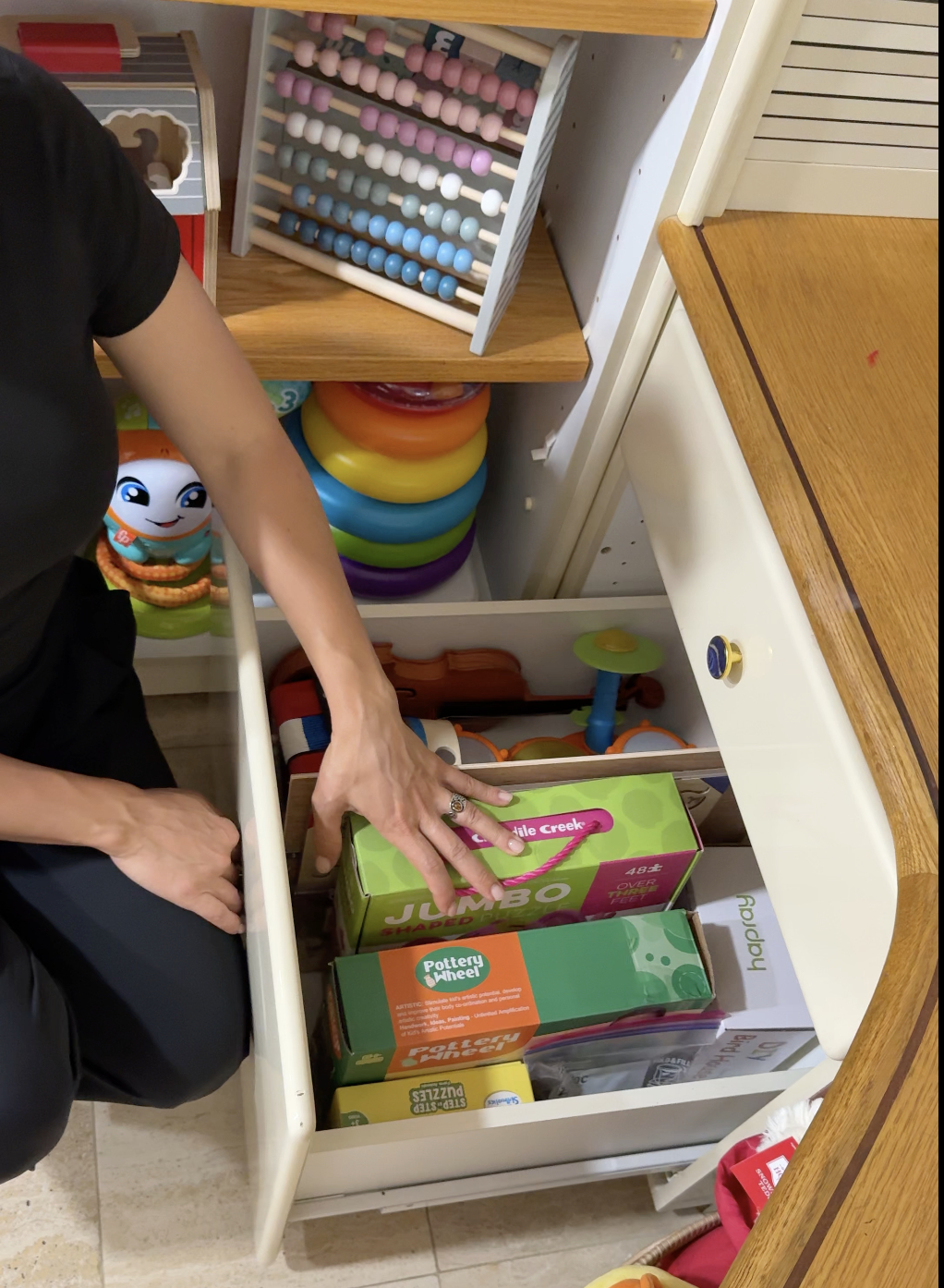
Not every activity belongs on open shelves. Some things like puzzles, board sets, and especially musical instruments — are best stored away. These items live in a low drawer: easy for adults to reach, but not constantly visible to the child.
This way, noisy or complex activities become “special invitations”, something to pull out when family or guests are ready for them. It keeps everyday play calm, but still makes space for music and learning moments.
Not every activity belongs on open shelves. Some things like puzzles, board sets, and especially musical instruments — are best stored away. These items live in a low drawer: easy for adults to reach, but not constantly visible to the child.
This way, noisy or complex activities become “special invitations”, something to pull out when family or guests are ready for them. It keeps everyday play calm, but still makes space for music and learning moments.
4. The Project & Keepsake Zone
Children love to create, and just as important, they love to know that their creations matter. For this reason, we added a clear container system where ongoing projects and finished crafts are stored.
Instead of pieces being scattered around the house, everything has a place. Parents can occasionally sit with the child, go through the projects, and decide together what to keep and what to let go. It’s a beautiful way to track progress — from the very first scribbles to more detailed works.
We also added grab-and-go pouches above this zone, perfect for small items like cards, chalk, or crayons. These bags can be taken to the car, to grandparents’ house, or even on trips, and then easily returned.
Children love to create, and just as important, they love to know that their creations matter. For this reason, we added a clear container system where ongoing projects and finished crafts are stored.
Instead of pieces being scattered around the house, everything has a place. Parents can occasionally sit with the child, go through the projects, and decide together what to keep and what to let go. It’s a beautiful way to track progress — from the very first scribbles to more detailed works.
We also added grab-and-go pouches above this zone, perfect for small items like cards, chalk, or crayons. These bags can be taken to the car, to grandparents’ house, or even on trips, and then easily returned.

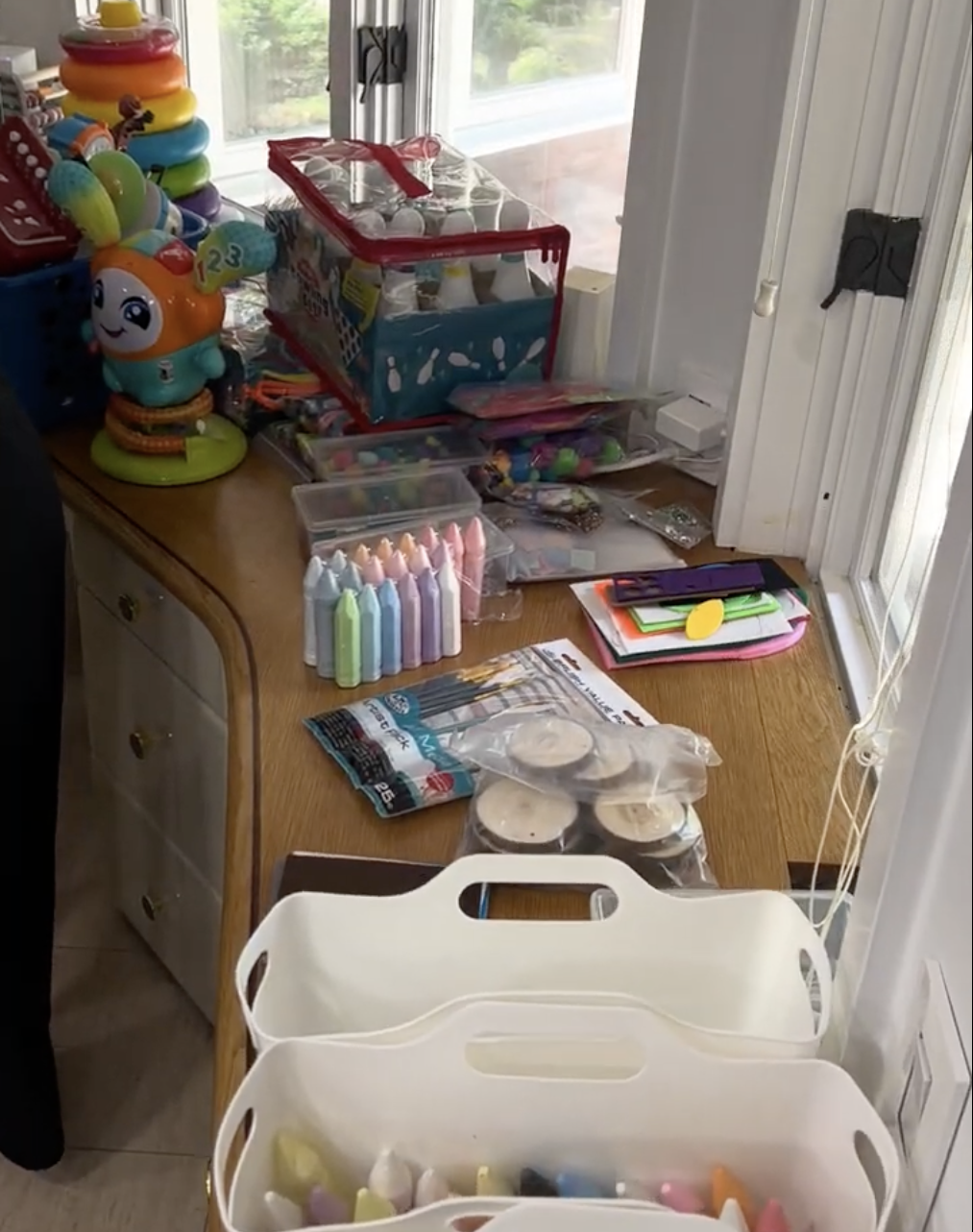
5. The Creative Cart
One of the most flexible parts of this system is the mobile art cart. It holds paints, pencils, brushes, markers, and paper — all organized in trays and ready to roll.
The cart can be moved anywhere: next to the play table, into the living room, or even outside for family art time. We also stocked it with practical extras: aprons, wipes, and paper towels for quick cleanups.
The cart not only sparks creativity, but also teaches the child that every supply has its place and goes back there after use.
One of the most flexible parts of this system is the mobile art cart. It holds paints, pencils, brushes, markers, and paper — all organized in trays and ready to roll.
The cart can be moved anywhere: next to the play table, into the living room, or even outside for family art time. We also stocked it with practical extras: aprons, wipes, and paper towels for quick cleanups.
The cart not only sparks creativity, but also teaches the child that every supply has its place and goes back there after use.

6. The Modular Storage Wall
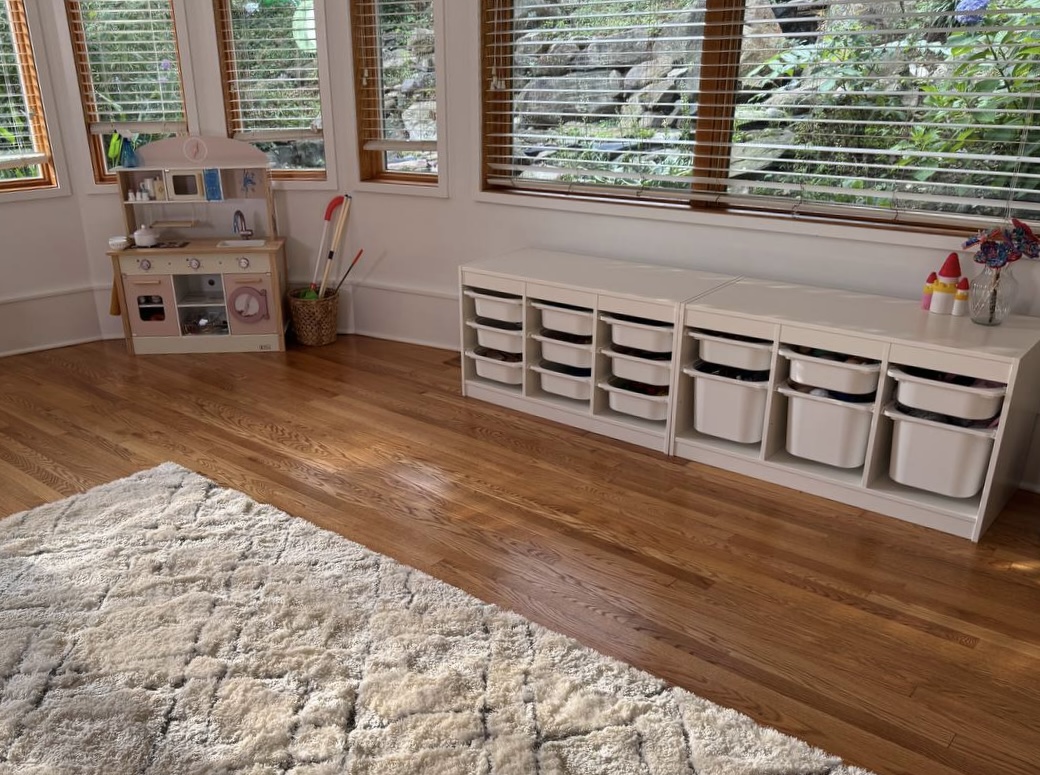
Finally, we created a long, low modular storage system with bins. This is where quick-access toys and creative modules (like modeling clay, beads, or train sets) live. The bins are easy for a child to pull out, play with, and return.
The beauty of this zone is flexibility — as the child grows, the contents of the bins will evolve. Today it’s stacking rings and clay; tomorrow it might be LEGO sets, board games, or early school supplies. The structure stays the same, but the play adapts.
Finally, we created a long, low modular storage system with bins. This is where quick-access toys and creative modules (like modeling clay, beads, or train sets) live. The bins are easy for a child to pull out, play with, and return.
The beauty of this zone is flexibility — as the child grows, the contents of the bins will evolve. Today it’s stacking rings and clay; tomorrow it might be LEGO sets, board games, or early school supplies. The structure stays the same, but the play adapts.
The Result: From Clutter to Calm
The transformation was incredible. The room went from overwhelming chaos to a beautifully organized kids’ space that supports both fun and learning. Toys are neatly categorized, art supplies are stored in labeled containers, and the entire environment feels brighter and more welcoming.
By dividing the room into six intentional zones, we created a space that is:
• Organized yet flexible (it adapts as the child grows);
• Visually calm (toys are displayed in small groups, not in overwhelming piles);
• Development-focused (encouraging independence, creativity, and responsibility).
This playroom is now not just a storage space, but a living, evolving environment where learning and joy go hand in hand.
• Organized yet flexible (it adapts as the child grows);
• Visually calm (toys are displayed in small groups, not in overwhelming piles);
• Development-focused (encouraging independence, creativity, and responsibility).
This playroom is now not just a storage space, but a living, evolving environment where learning and joy go hand in hand.
If you’re ready to turn toy chaos into calm order, LetGo Organizing is here to help. Contact us today to schedule your free consultation and discover how a well-organized home can transform your family’s daily life.